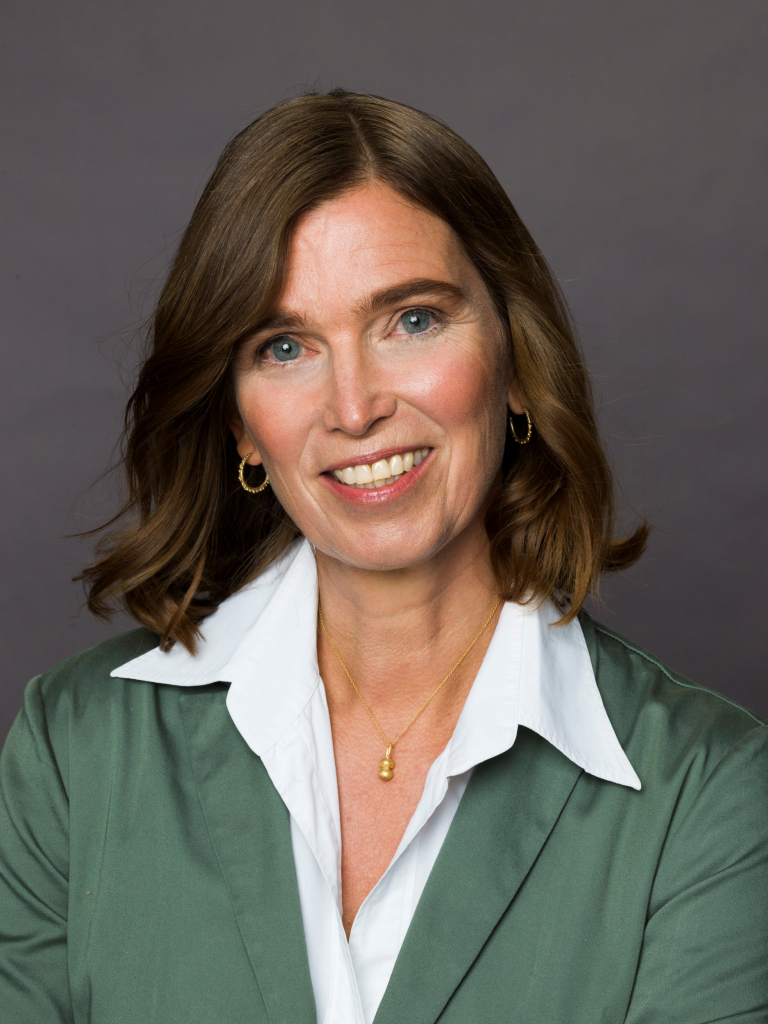
Prof. Dr. habil. Veronika Eyring
Professor of AI for Climate and Physical Systems
University of Tübingen
connAIx – Research School for Applied AI Baden-Württemberg
Founding Director
Bildungscampus
74076 Heilbronn, Germany
and
Tübingen AI Center
Faculty Member
Maria-von-Linden-Str. 1
72076 Tübingen, Germany

Phone: +49-xxx
E-Mail: veronika.eyring[at]uni-tuebingen.de
https://veronika-eyring.de
ORCID ID: orcid.org/0000-0002-6887-4885
Google Scholar: see here
Github: EyringMLClimateGroup | Veronika Eyring
Scopus Author ID: 13402933200
ResearcherID: O-9999-2016
Curriculum Vitae
Academic Background
Habilitation
Habilitation in Environmental Physics, University of Bremen, Title: “Modelling of the Coupled Chemistry-Climate System: Projections of Stratospheric Ozone in the 21st Century and Impact of Shipping on Atmospheric Composition and Climate”
2008
Doctorate
PhD in Physics, University of Bremen, Title: “Model Studies on the Arctic Stratospheric Chemistry compared to Measurements”
1999
Diploma
Diploma in Physics, Friedrich-Alexander-University Erlangen-Nürnberg, Thesis in theoretical solid state physics, Title: „Coupling of tunnel systems with a harmonic substitute model“
1994
Other Degrees
1st State Examination for Teaching at High Schools, Mathematics & Physics, Friedrich-Alexander-University Erlangen-Nürnberg
1994
Positions, Honors, and Awards
Current Positons
- Head of Department “Earth System Model Evaluation and Analysis”, DLR-IPA
2018-present
- Full Professor and Chair of Climate Modelling, University of Bremen
2017-present
Current Additional Affiliations
- Distinguished Affiliated Professor, Technical University of Munich (TUM)
2024-present
- Affiliate Scientist, National Center for Atmospheric Research (NCAR), Climate and Global Dynamics (CGD), Boulder, USA
2013-present
Employment History
- Founder and Scientific Supervisor “Climate Informatics” Group, DLR Institute for Data Science, Jena, Germany
2017-2022
- Research Scientist, DLR-IPA (Senior Scientist 2009-2018; Head of Earth System Model Evaluation Group 2014-2018)
2000-2018
- Private lecturer, Ludwig-Maximilians-University (LMU), Munich, Germany
2010-2017
- Honorary Visiting Professor, University of Exeter, College of Engineering, Mathematics and Physical Sciences, UK
2013-2016
- Visiting Scientist, NCAR, Boulder, USA
04-11/2013
- Visiting Professor, Manchester Metropolitan University, Centre for Air Transport and the Environment (CATE), UK
2009-2012
- Private lecturer, IUP, University of Bremen
2008-2010
- Research Scientist, IUP, University of Bremen, Germany
1995-1999
Honors and Awards
2026
- European Research Council (ERC) Synergy Grant “Understanding and Modelling the Earth System with Machine Learning (USMILE)” as Corresponding Principal Investigator (PI)
2019
- Thomson Reuters Highly Cited Researcher
2016-2021
- Top female researchers award (W2/W3 Professorship pro-gramme) through the Initiative and Networking Fund of the Helmholtz Association “Advanced Earth System Model Evaluation for CMIP“
2015
- Senior Scientist Nomination at DLR
2009
- Helmholtz Association of German Research Centres Scholar-ship for the Young Investigators Group SeaKLIM “Impact of Ship Emissions on Atmosphere and Climate”
2004-2010
- ERASMUS Scholarship to study Physics at the University of York, UK
1991-1992
Professional Activities
Contributions to International Assessment Reports
- Coordinating Lead Author, IPCC Working Group (WG) I Sixth Assessment Report “Chapter 3: Human Impact on the Climate System”
2018-2021
- Lead Author, IPCC WG I Fifth Assessment Report “Chapter 9: Evaluation of Climate Models”
2010-2013
- Contributing Author, UNEP Synthesis Report: Bridging the Emissions Gap “Chapter 4: International Emissions”
2011
- Lead Author for the WMO/UNEP Scientific Assessment of Ozone Depletion: 2010 “Chapter 3: Future Ozone and its Impact on Surface UV”
2008-2010
- Coordinating Lead Author, European Assessment of Transport Impacts on Climate Change and Ozone Depletion: 2009 “Chapter 3: Assessment of Transport Impacts on Climate and Ozone: Shipping”
2007-2009
- Co-Author, WMO/UNEP Scientific Assessment of Ozone Depletion: 2006 “Chapter 6: The Ozone Layer in the 21st Century”
2005-2007
- Contributing Author, IPCC WG I Fourth Assessment Report, “Chapter 7: Couplings Between Changes in the Climate System and Biogeochemistry”
2005-2007
Membership in Active External Professional Committees and Societies
- Member Scientific Advisory Committee (SAC) of the National Institute for Theoretical and Computational Sciences (NITheCS)
Since 2025
- Member Euro-Mediterranean AI for Climate Change (EUMACC)
Since 2025
Since 2024
- Member Scientific Advisory Board for Worldfund
Since 2022
Since 2018
- Scientific Steering Committee Member “Scenario Model Intercomparison Project (ScenarioMIP)”
Since 2014
- Member “Met Office Hadley Centre Science Review Group (SRG)”
2018-2024
- Member “World Climate Research Program (WCRP) Coupled Model Intercomparison Project (CMIP) Panel
2021-2022
- Chair WCRP CMIP Panel
2014-2020
- Scientific Steering Committee Member “WCRP Data Advisory Council’s Observations for Model Evaluation Task Team (WDAC)”
2014-2020
- Founder and PI “Earth System Model Evaluation Tool (ESMValTool)”
2014-2020
- Scientific Steering Committee Member “Aerosol Chemistry Model Intercomparison Project (AerChemMIP)”
2014-2020
- Scientific Steering Committee Member “Working Group on Numerical Experimentation (WGNE)/Working Group on Coupled Modelling (WGCM) diagnostic and metrics panel”
2008-2020
- Scientific Steering Committee Member “WCRP’s Working Group on Coupled Modelling (WGCM)”
2008-2018
- Scientific Steering Committee Member “IGAC/SPARC Chemistry-Climate Model Initiative (CCMI)”
2014-2015
- Scientific Steering Committee Member “WCRP’s SPARC (Stratosphere-troposphere Processes And their Role in Climate)”
2008-2014
- Founder and Co-chair “CCMI”
2012-2013
- Founder and Scientific Coordinator “WCRP SPARC Chemistry-Climate Model Validation (CCMVal) Activity”
2004-2012
Scientific Organizing Committees for International Conferences and Workshops
- Gordon Research Conference Machine Learning for Actionable Climate Science, Bryant University, USA, June 22 – 27, 2025 (Role: Chair)
2025
- Digital Twin Earth, Lorentz Center Workshop, Leiden, The Netherlands (Role: Co-Convener)
2023
- Exploring the frontiers in Earth system modeling with machine learning and big data, Aspen Global Change Institute (AGCI), Aspen, USA (Role: Lead Convener)
2022
- NeurIPS 2019 Competition on Causality for Climate (C4C), Vancouver, Canada (Role: Co-Organizer)
2019
- CMIP6 Model Analysis Workshop, 25-28 March 2019, Barcelona, Spain (Role: Lead Convener)
2019
- Co-Convener of the session “Climate Informatics” at the AGU Fall meeting, Washington DC, 10-15 December 2018
2018
- Earth System Model Evaluation to Improve Process Understanding, Aspen Global Change Institute (AGCI), 30 July – 4 August 2017, Aspen, USA (Role: Lead Convener)
2017
- IPCC/WCRP Model fitness-for-purpose Workshop, 23-24 February 2017, Hamburg, Germany (Role: Co-convener)
2017
- WCRP/FP7 EMBRACE Workshop on CMIP5 Model Analysis and Scientific Plans for CMIP6, Dubrovnik, Croatia, 20-23 October 2015 (Role: Member of Scientific Organizing Committee)
2015
- Earth System Model Evaluation Tool (ESMValTool) Development Workshops, Munich, Germany (Role: Lead Convener)
At least one from 2015-2020
- Future Perspectives for Scientific and Infrastructural Needs in Earth System Model Evaluation, De Bilt, The Netherlands, 12-13 May 2014 (Role: Lead Convener)
2014
- Observation for Model Intercomparison Projects (Obs4MIPs) for CMIP6 Meeting, Washington DC, NASA Headquarters, April 2014 (Role: Co-convener).
2014
- WCRP SPARC 5th General Assembly, New Zealand, January 2014 (Role: Co-chair of Scientific Organizing Committee).
2014
- Next generation climate change experiments needed to advance knowledge and for assessment of CMIP6, AGCI, Aspen, August 2013 (Role: Member of Scientific Organizing Committee).
2013
- IGAC/SPARC Chemistry-Climate Model Initiative (CCMI) Workshop 2013, Boulder, USA, May 2013 (Role: Lead convener and member of Scientific Organizing Committee).
2013
- Workshop on Emergent Constraints, UK MetOffice, Exeter, March 2013 (Role: Co-convener)
2013
- IGAC/SPARC Global Chemistry-Climate Modeling and Evaluation Workshop, Davos, Switzerland, May 2012 (Role: Co-chair of Scientific Steering Committee).
2012
- Parallel Session ‚Assessing the Reliability of Climate Models, CMIP5‘ at WCRP Open Science Conference, Denver, October 2011 (Role: Lead convener).
2011
- WCRP’s SPARC 4th General Assembly, Bologna, Italy, Sep 1-5, 2008 (Role: Member of Scientific Organizing Committee).
2008
- World Modelling Summit for Climate Prediction, ECMWF, Reading, UK, May 6-9, 2008 (Role: Member of Scientific Organizing Committee).
2007-2008
- CCMVal Workshop (Role: Lead convener)
- Germany
- USA
- UK
- Canada
2003-2009
2003
2005
2007
2009
Editor of International Reports
- Geoscientific Model Development Special Issue “Coupled Model Intercomparison Project Phase 6 (CMIP6) – Experimental Design and Organization”
2015-2020
2007-2010
Teaching Activities
Each course included 14 individual lectures of 1.5 hours each and a final exam
- Climate Modelling Part 1 and 2, University of Bremen, Germany
Since 2017
- Introduction to Global Atmospheric Modelling, LMU, Germany
2011-2015
- Introduction to Global Atmospheric Modelling: Part 1 and 2, University of Bremen, Germany
2009-2010
- Tropospheric Chemistry, University of Bremen, Germany
2005/2006
- Molecular Physics, University of Bremen, Germany
2005
- Climate and Chemistry, University of Bremen, Germany
2005
- Introduction to Atmospheric Modelling, University of Bremen, Germany
2004
Ten representative publications as main author
PhD students in italic
- Eyring, V., W. D. Collins, P. Gentine, and 25 co-authors, Pushing the frontiers in climate modelling and analysis with machine learning, Nat. Clim. Chang. (2024). (highly cited)
- Eyring, V., P. Gentine, G. Camps-Valls, D. M. Lawrence, and M. Reichstein, AI-empowered next-generation multiscale climate modelling for mitigation and adaptation, Nat. Geosci. (2024).
- Eyring, V., V. Mishra, G. Griffith, L. Chen, T. F. Keenan, M. R. Turetsky, S. Brown, F. Jotzo, F. C. Moore, and S. van der Linden, Reflections and projections on a decade of climate science. Nat. Clim. Chang. 11, 279–285 (2021).
- Eyring, V., and 52 co-authors. Earth System Model Evaluation Tool (ESMValTool) v2.0 – an extended set of large-scale diagnostics for quasi-operational and comprehensive evaluation of Earth system models in CMIP, Geosci. Model Dev., 13, 3383–3438 (2020).
- Eyring, V., and 28 co-authors, Taking climate model evaluation to the next level. Nature Climate Change (2019). (highly cited)
- Eyring, V., Bony, S., Meehl, G. A., Senior, C. A., Stevens, B., Stouffer, R. J. & Taylor, K. E. Overview of the Coupled Model Intercomparison Project Phase 6 (CMIP6) experimental design and organization. Geosci. Model Dev. 9, 1937-1958 (2016). (highly cited)
- Grundner, A., Beucler, T., Gentine, P., & Eyring, V., Data-driven equation discovery of a cloud cover parameterization. Journal of Advances in Modeling Earth Systems, 16, e2023MS003763 (2024).
- Heuer, H., Schwabe, M., Gentine, P., Giorgetta, M. A., & Eyring, V., Interpretable multiscale machine learning-based parameterizations of convection for ICON. Journal of Advances in Modeling Earth Systems, 16, e2024MS004398 (2024).
- Iglesias‐Suarez, F., Gentine, P., Solino‐Fernandez, B., Beucler, T., Pritchard, M., Runge, J. and Eyring, V., Causally‐informed deep learning to improve climate models and projections. Journal of Geophysical Research: Atmospheres, 129(4), p.e2023JD039202 (2024).
- Runge, J., A. Gerhardus, G. Varando, V. Eyring, and G. Camps-Valls, Causal inference for time series. Nat Rev Earth Environ (2023). (highly cited)
Invited and Keynote Presentations, Panels, and Lectures
selected, overall more than 90
- Machine learning enhanced hybrid Earth System Modelling for CMIP7. Keynote presentation, CMIP 2026 Community Workshop, Kyoto, Japan
03/2026
- AI4Climate, ERC Annual Conference Frontier Research for One Health, Brussels, Belgium
01/2026
09/2025
- Visions4AI in Climate Modelling, Invited TED talk, Visions4AI-Event, Hannover, Germany
09/2025
- Lessons from climate model evaluation and benchmarking, Workshop “ClimateBench2.0: Probabilistic climate model scoring”, San Diego, CA, USA, 4 September 2025.
08/2025
- Advancing Earth System Science with AI, NCAR AI Roadmap Workshop, Boulder, USA
08/2025
- AI-empowered Next-generation Multiscale Climate Modeling for Mitigation and Adaptation, NASA GISS, New York, USA; GFDL Princeton, Princeton, USA; AGU 2024
05/202 & 12/2024
- Pushing Frontier Research in Climate Modelling with AI for Urgent Mitigation and Adaptation Needs, Invited talk and Panel discussion (remote), UN science, technology, and innovation for the SDGS (STI FORUM) 2024, New York, USA
05/2024
- Improving Earth System Model Parametrizations with ML, South African Regional – Global Modelling Community Model Workshop, Invited Talk (remote), Stellenbosch, South Africa
11/2023
- Improving Earth System Model Parametrizations with ML, WCRP Open Science Conference, Invited Keynote, Kigali, Ruanda
10/2023
- ML for improved understanding and projections of climate change, Workshop Machine Learning for Science, Oberwolfach, Germany
06/2023
- Invited Speech COP27 World Leader’s Summit Opening Ceremony, Sharm El Sheikh, Egypt
11/2022
- Monitoring Climate Change: Machine Learning for Improved Climate Models, Invited Keynote Presentation, Festival der Zukunft, 1E9 Deutsches Museum, Munich, Germany
07/2022
- Machine learning physics-aware climate modelling, Invited Panel member “The Future of Climate Modelling” (remote), COP26, Glasgow, UK
11/2021
- Better Better – machine learning for improved climate models and projections, AI4Good Seminar Series, Virtual Event
11/2021
Reviewing Activities, Evaluations, and Selection Committees
selected
- Selection Committee for the Gottfried Wilhelm Leibniz Programme
Since 2024
- Member of the Met Office Hadley Centre Science Review Group (SRG)
2018-2024
- Editor ‘CMIP6 Experimental Design and Organization’, Special Issue Geosci. Model Dev.
2015-2020
- Reviewer for nominations and calls (e.g., NCAR, NASA, University of Hawaii (USA)
Since 2007
- Reviewer for international proposals (e.g., EU including ERC, Council of Norway, Israel Science Foundation (ISF), Canadian Foundation for Climate, New Zealand Antarctic)
Since 2004
- Many reviews of scientific articles in influential journals for climate science
Since 2004
Supervisor for Students and PostDocs
At DLR, the University of Bremen, and TUM, I currently supervise 13 PostDocs, 14 PhD students, and 2 Master students. In total, I have supervised 29 PhD, 13 Master’s, and 4 Bachelor’s students, and guided more than 22 PostDocs, many of whom have built distinguished careers.
Currently supervising
- Master students:
- Laura Caspers (Universität Bonn), „Entwicklung von „Impact“-Diagnostiken im ESMValTool“, since 03/2026
- PhD students:
- Aoife McQuaid (DLR & TUM), „ML-based Chemistry emulation for improved aerosol-cloud interactions“, since 10/2025
- Timo Maier (DLR & TUM), „Foundation models and uncertainty quantification (Learning dynamic subgrid-scale processes)“, since 03/2025
- Markus Klassen (UB & DLR, co-supervised by Prof Pierre Gentine), „Learning shallow clouds and turbulence from Earth observations and high-resolution models with machine learning and equation discovery“, since 02/2025
- Jurij Schönfeld (UB & DLR), „Developing ML-based parametrizations for high-resolution climate models“, since 02/2025
- Santiago Castillo (DLR & TUM), „Towards a Stochastic-QML-based parametrization for convection“, since 12/2024
- Joschka Herteux (UB & DLR, co-supervised by Prof Pierre Gentine), (Q)ML-based large ensembles and extremes, since 10/2024
- Alexander Häbel (DLR & TUM), „Quantum solution for differential equations in climate models“, since 10/2024
- Max Bouman (DLR & TUM), „ML-based automatic tuning land-atmosphere“, since 11/2023
- Diajeng Atmojo (UB, co-supervised by Prof Thomas Jung), „ML-based sea ice parametrizations for ICON“, since 09/2023
- Janis Klamt (DLR, co-supervised by Prof Pierre Gentine), „ML-based parameterizations for ICON“, since 05/2023
- Elias Haslauer (DLR & TUM), „ML-based gravity waves parameterization“, since 03/2023
- Birgit Kühbacher (DLR & TUM, co-supervised by Prof Niki Kilbertus), „Development of causal neural networks to improve climate models“, since 01/2023
- Ellen Sarauer (DLR & TUM, co-supervised by Prof Pierre Gentine), „ML-based parameterizations for ICON“, since 01/2023
- Lukas Lindenlaub (UB), „Machine learning based analysis and detection of droughts in climate projections“, since 04/2022
- PostDocs:
- Dr Helge Heuer (DLR), „ML-based parameterizations for ICON“, since 02/2026
- Dr Hedwig Keller (DLR) „Shadow Models“, since 03/2025
- Dr Giulia Castellani (UB), since 02/2025
- Dr Nils Klement (DLR) „Quantum Computing PDEs“, since 07/2024
- Dr Bettina Gier (UB) „ESMValTool technical / HybridESM-Bench“, since 06/2024
- Dr Arthur Grundner (DLR) „Equation discovery and tuning“, since 02/2024
- Dr Jan-Hendrik Malles (UB) „ML climate“, since 08/2023
- Dr Lena Dogra (DLR) „ML Climate“, since 06/2023
- Dr Evgenia Galytska (UB) “Causal model evaluation“, since 12/2019
- Research scientists in the Department:
- Dr Julien Savre-Piou (DLR) „ICON-XPP-ML / Shallow Clouds across scales“, since 06/2024
- Dr Manuel Schlund (DLR) “Observationally-based constraints of climate feedbacks and projections”, since 03/2024
- Dr Birgit Hassler (DLR), “CMIP model evaluation and ESMValTool development“, since 09/2017
- Dr Lisa Bock (DLR) “CMIP model evaluation and ESMValTool development“, since 07/2016
- Dr Axel Lauer (DLR), “CMIP model evaluation and ESMValTool development“, since 01/2015
- Dr Mierk Schwabe (DLR), “ML-based parameterizations for ICON“, since 06/2021
- Dr Katja Weigel (UB), “CMIP model evaluation and ESMValTool development, ML for the detection and understanding of droughts“, since 07/2018
Previous supervision Climate Assessment Reports
- Internships:
- Emma Kasteleyn (Universiteit van Amsterdam, NL), 03/2026-05/2026
- Franziska Frank (TUM, Internship), 11/2013-02/2014
- Shoko Mizutani (Boston University, USA, Internship), 07/2013
- Bachelor students:
- Alexander Haluszczynski (LMU, Bachelor thesis), Evaluation of the South Asian Monsoon in the ECHAM/MESSy Atmospheric Chemistry model, 06/2014
- Melanie Bräu (LMU, Bachelor thesis), Sea-ice in decadal and long-term simulations with the Max Planck Institute Earth System Model, 07/2013
- Michael Hübner (LMU, Bachelor thesis), Evaluation of Sea-ice in the Max Planck Institute Earth System Model, 03/2013
- Carolin Klinger (LMU, Bachelor thesis), CO2-Klimawirkung und Minderungspotential für alternative Treibstoffe in der Schifffahrt, 07/2009
- Master students:
- Juan de Dios Rodríguez Garrido (University of Murcia, co-supervised by Humberto Martinez Barbera), „QML-based parameterization of the atmospheric boundary layer height“, 07/2026
- Valentina Sarandrea (LMU, co-supervised by Jeanette Miriam Lorenz) „Explainable Quantum Machine Learning for cloud cover parameterization„, 04/2025
- Julian Bauer (DLR & LMU co-supervised by Anja Schmidt), „Understanding and evaluating clouds in machine learning based climate models“, 01/2024
- Jonas Appenheimer (UB), „Causal model evaluation for air-sea interactions“, 10/2024
- Lukas Ruhe (UB, co-supervised by Prof Markus Reichstein) “A comparison of drought indices in CMIP6 climate projections”, 03/2022
- Simon Zitzmann, (LMU, Master thesis), Detecting Activity of Tropical Cyclones with the Unsupervised Maximally Divergent Interval Algorithm, 03/2020
- Soufiane Karmouche (UB, co-supervised by Dr Runge), Understanding dependency structures in the major modes of climate variability with causal discovery, 01/2020
- Kemisola Adeniyi (UB, co-supervised by Prof Reichstein), Characteristics of droughts in CMIP6 models, 12/2019
- Dominik Kunert (LMU, Master thesis), Climate variability modes and their impact on the hydrological cycle – A model evaluation study, 10/2015
- Daniel Senftleben (LMU, Master thesis), Verification of Temperature and Sea Ice in the MiKlip Decadal Climate Predictions with the ESMValTool, 08/2014
- Carolin Klinger (LMU, Master thesis), Quantitative evaluation of ozone and selected climate parameters in the chemistry-climate model EMAC, 12/2011
- Andreas Paxian (LMU, Diploman thesis), Aufbau eines globalen Bottom-up-Schiffsemissionskatasters unter Berücksichtigung zukünftiger polarer Schiffsrouten, 03/2008
- Kathrin Götzfried (LMU, Diploma thesis), Modellierte Partitionierung von NOy in der Stratosphäre im Vergleich mit Messdaten, 03/2003
- PhD students:
- Katharina Hafner (UB, co-supervised by Prof Pierre Gentine), „Interpreting and Improving the Radiation Parameterization for ICON with Machine Learning„, 02/2022-02/2026
- Helge Heuer (DLR & UB, co-supervised by Prof Pierre Gentine), „Toward Physically Consistent, Accurate and Stable Machine Learning-Based Convection Parameterizations for ICON„, 02/2022-02/2026
- Aytaç Paçal, (DLR & UB) “ML-based analysis of extreme events”, 03/2020-09/2025
- Kirsten Schulze (UB & DLR), „Improving climate models with ML and Earth Observation through data-model fusion“, since 02/2025-09/2025
- Kevin Debeire (DLR & TU Berlin, co-supervised by Prof Jakob Runge) “Development of causal discovery methods for climate model evaluation“, 06/2019-12/2024
- Gunnar Behrens (DLR & UB, co-supervised by Prof Pierre Gentine) “ML-based cloud parametrizations for climate models”, 05/2019-05/2024
- Bettina Gier (UB) “Constraining carbon cycle feedbacks with satellite observations”, 09/2017-05/2024
- Arndt Kaps (DLR & UB) “ML-based cloud classification from satellite data”, 02/2020-01/2024
- Arthur Grundner (DLR & UB, co-supervised by Prof Pierre Gentine) “ML-based cloud parametrizations for ICON”, 12/2019-01/2024
- Soufiane Karmouche (UB, co-supervised by Prof Jakob Runge) “Causal model evaluation”, 03/2020-06/2024
- Manuel Schlund (DLR & UB) “Observationally-based constraints of climate feedbacks and projections”, 10/2017-08/2021.
- Daniel Senftleben (DLR-IPA & LMU, PhD thesis), Arctic sea ice in Earth system models: decadal hindcast skill and constraints of long-term projections, 03/2019.
- Sabrina Wenzel (LMU / University of Exeter (UK), PhD thesis), Observationally-based Constraints of Future Climate Projections of Carbon Cycle Feedbacks and the Shift in the Austral Jet Stream, 12/2015.
- Klaus Franke (University of Bremen, PhD thesis), Analyse von NOx Emissionen des Schiffsverkehrs mittels Modellierung und Satellitendaten, 2008.
- Mathias Schreier (University of Bremen, PhD thesis), Der indirekte Einfluss von Aerosol auf Schiffsemissionen auf den Strahlungshaushalt der Atmosphäre: Untersuchung mittels Fernerkundungsdaten, 2007
- PostDocs:
- Dr Kevin Debeire (DLR) „ICON-XPP ML-Parametrizations and ML-based Downscaling“, since 2025-2026
- Dr Aytaç Paçal, (DLR) „ML-based understanding and detection of extreme events“, 2025-2026
- Dr Pauline Bonnet (DLR) „ML-based automatic model tuning for ICON“, 2022-2026
- Dr Gunnar Behrens (UB) „ML-based stochastic parametrizations for ICON-XPP“, 2024-2025
- Dr Lorenzo Pastori (DLR) „ML Climate“, 2023-2025
- Dr Manuel Schlund (DLR) “Observationally-based constraints of climate feedbacks and projections”, 2021-2024
- Dr Klaus-Dirk Gottschaldt (DLR) “Chemistry-climate model evaluation”, 2012-2015
- Dr Irene Cionni (DLR) “Climate model evaluation”, 2009-2010
- Dr. Iryna Khlystova (University of Bremen) „Satellite simulators“, 2009-2010
- Dr Mauro Dall’Amico (DLR) “Climate model evaluation”, 2008-2010
- Dr Mathias Schreier (University of Bremen) „Impact of ship emissions on atmosphere and climate“, 2008-2010
- Dr Axel Lauer (DLR) “Impact of ship emissions on atmosphere and climate“, 2004-2007
- Dr Sabrina Zechlau, previously Wenzel (DLR) “Emergent constraints for carbon cycle feedbacks“, 02/2016-07/2021
- Research scientists in the Department:
- Dr Fernando Iglesias-Suarez (DLR) “Machine learning (ML)-based cloud parameterizations“, 10/2023-05/2024
- Research Software Engineers in the Department:
- Diego Cammarano (DLR), 07/2023-09/2025
- Jérémy Kraft (DLR), 07/2023-12/2024
- Dr Enrico Fengler (DLR), 11/2023-
- Dr Remi Kazeroni (DLR), 09/2020-08/2023
- Breixo Solino Fernandez (DLR), 10/2020-10/2023
- Björn Brötz (DLR), 03/2016 – 09/2020
Areas of Expertise
Climate Modelling | Climate Projections | Machine Learning (ML) | Understanding and Modelling the Earth System with Machine Learning | Process-Oriented Evaluation of Earth System Models | Development of Benchmarks for hybrid (physics + ML) Earth System Models | Distillation of Robust Information from Multi-Model Output | Development of the Earth System Model Evaluation Tool (ESMValTool)
Previous: Emission Estimates for International Shipping | Assessment of the Impact of International Shipping on Climate and Atmospheric Chemistry through Models and Observations | Policy Implications of Shipping Emissions and Mitigation Options | Ozone Projections